
Experiencing true Rishikesh – Sacred ghats, ancient caves and mystic temples
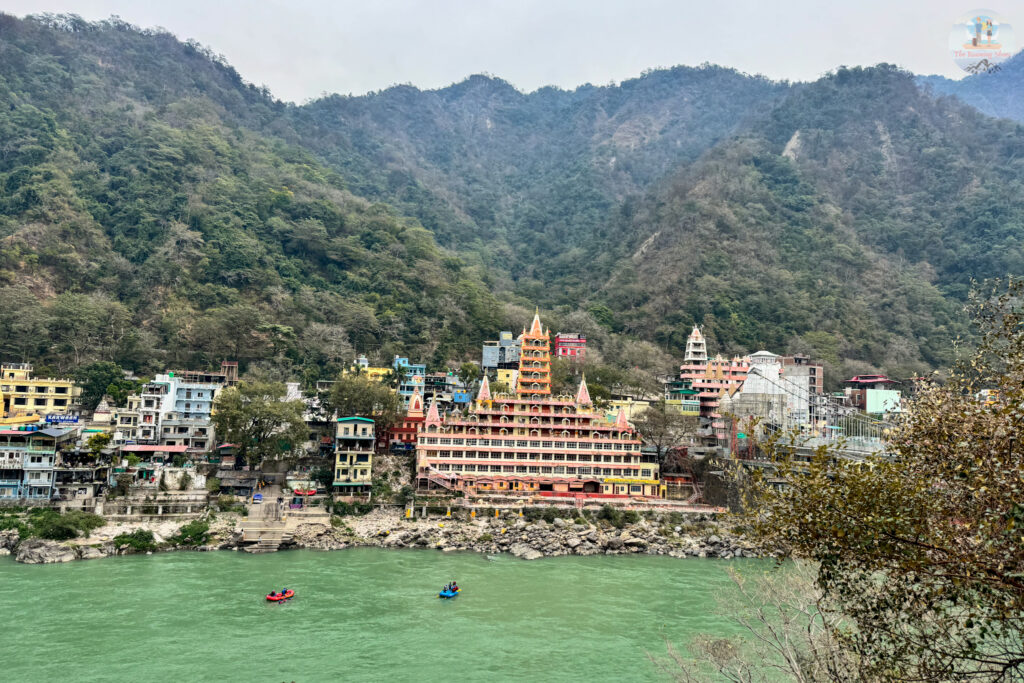
I can’t quite explain it. But there is something in the air of Rishikesh, something that can only be felt. Here, an ancient river flows. Not just a river, but a mother – gentle yet powerful, sustaining, forgiving and eternal. They call her Ganga Ji or Maa Ganga.
At dawn, temple bells echo through the air as if waking the mountains themselves. By evening, the ghats glow in the light of flickering diyas, and the aarti chants rise with such devotion that they send goosebumps down your spine.
Yoga schools and ashrams line the narrow pahadi lanes, their walls painted with mantras and quiet wisdom you pause to read. Every now and then, you pass a sadhu – distant, immersed in a world far removed from ours. Time feels slower here. Softer. As though the noise of modern life hesitates before entering.
Rishikesh feels different from the world we inhabit. It is deeply, spiritually tempting. Perhaps that’s why, after completing my yoga training, we found ourselves drawn here without ever planning to be. After all, this is the Yoga Capital of the World. And when Maa Ganga calls, who can truly resist?
The Rishikesh we will tell you about
There is no denying that Rishikesh has grown into one of the most popular travel destinations over the years. So, you will find endless guides listing cafes to try, rafting adventures to book, and neatly curated “top 10 things to do.”
But that is not the Rishikesh we are here to talk about.
I am going to tell you about the Rishikesh where you sit quietly by Maa Ganga, close your eyes, and for a few sacred moments, the world around you ceases to exist.
The Rishikesh where tears of joy and thankfulness blur your vision as the pandits lift the aarti lamps in perfect rhythm, in sync with the energetic chants and music.
The Rishikesh where stories of faith, surrender, gratitude and miracles meet you at every step.
If this is the Rishikesh you want to experience, then read on.
Soulful Experiences in Rishikesh
Ganga Aarti and Afterwards
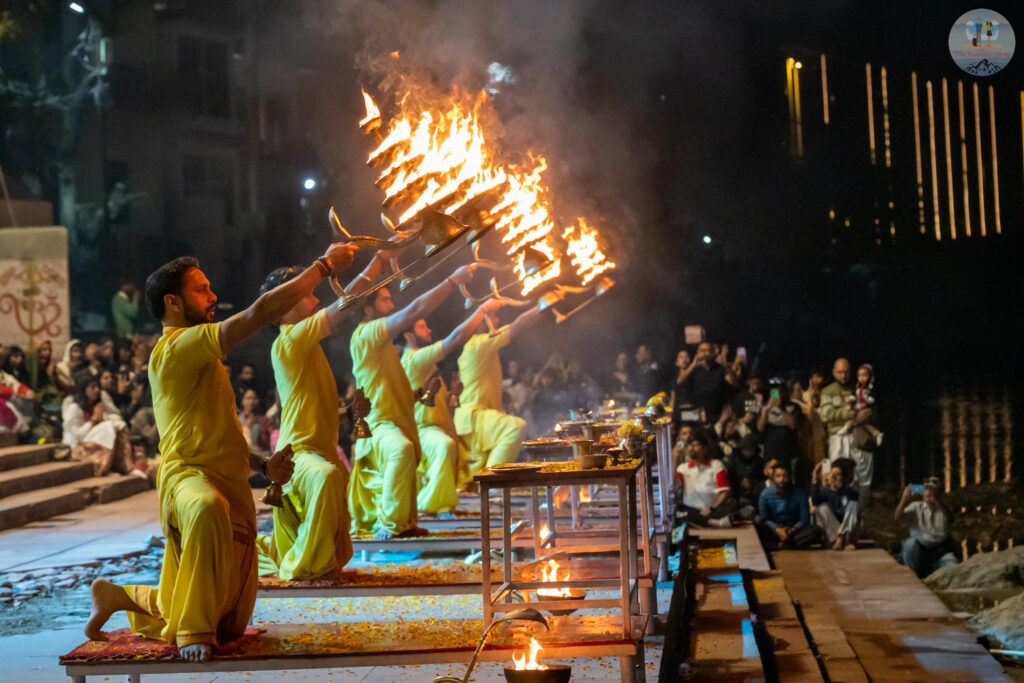
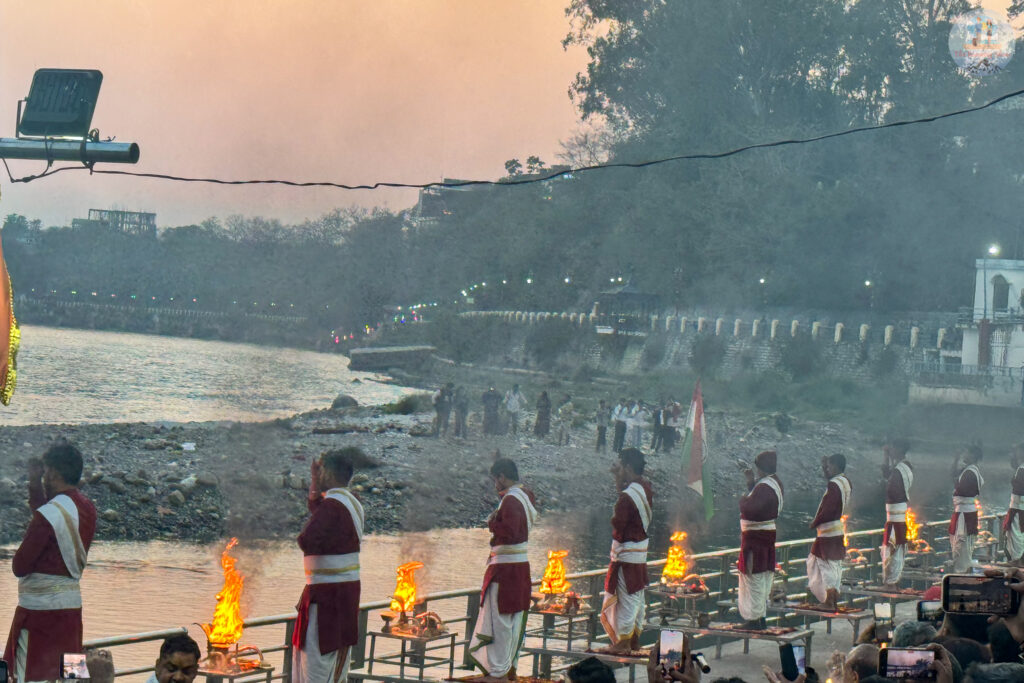
A visit to Rishikesh can never be complete without witnessing or rather, experiencing the Ganga aarti. I call it an experience because you don’t just watch it, you become a part of it. The chants, the bhajans, and the flames of the aarti transform the entire atmosphere into something almost otherworldly.
We were lucky to witness the aarti at different ghats including the famous Triveni Ghat and Paramarth Niketan. But the energy at Shatrughna Ghat and Sai Ghat felt truly distinct. Especially when the super-energetic Shiv Tandav Stotram begins to play, goosebumps are inevitable.
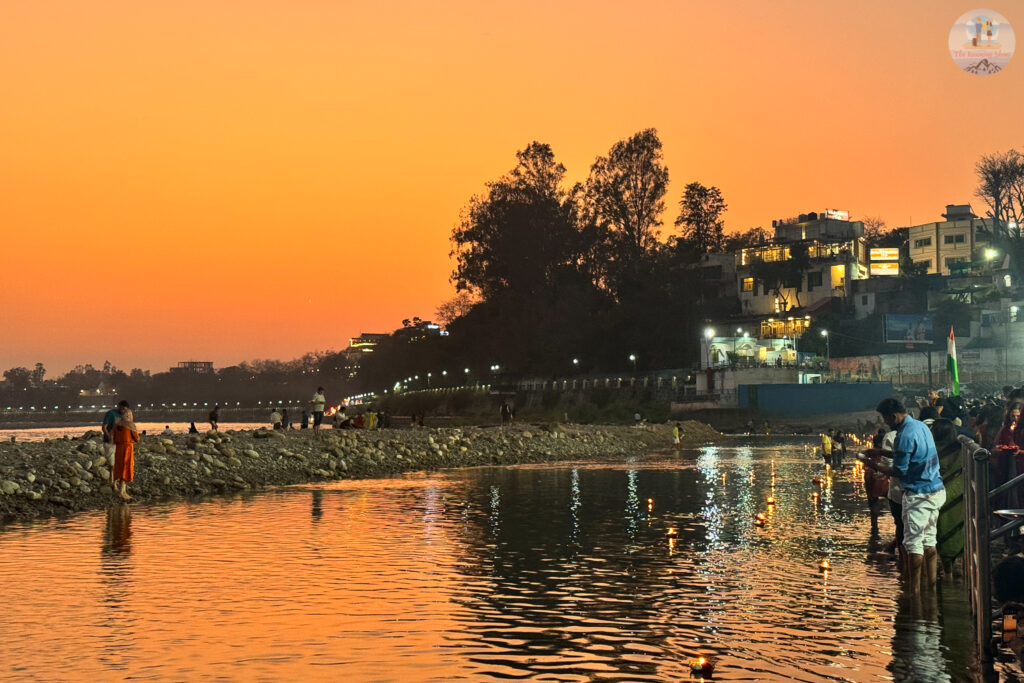
But the evening doesn’t end with the aarti. Just afterwards, people float diyas on the water, and they twinkle like stars drifting along the river. Somehow, it makes everything feel even more beautiful, even more enchanting. People linger with cups of tea and some sitting quietly with closed eyes. The ghats after aarti carry a different kind of vibe.
Sitting in the Ghats
When we visited Rishikesh, I asked a friend who had already been there what I absolutely shouldn’t miss. She said, “Visit the attractions, but more than that, just spend time sitting at the ghats.” I didn’t fully understand it then, but I do now. There’s a different, almost magnetic energy here. Just sitting by Maa Ganga, watching her flow, brings a deep sense of calm and clarity. It soon became a ritual for us, especially during the evenings.
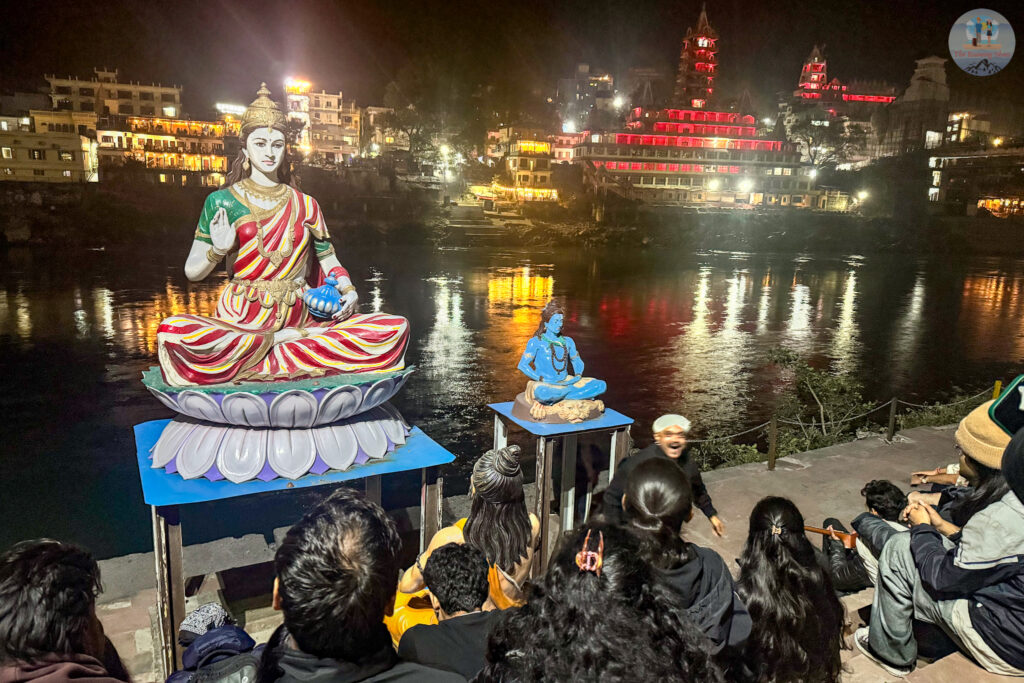
After the aarti, we would sit close to the water, on the steps or the rocks. And we would slip into meditation without even trying. It felt as if the river gently stilled the restless mind. Around us, there would be soft bhajans, a distant flute, or someone sharing stories of life. Some evenings, we would simply sit and listen, becoming a quiet part of the flow of the ghats.
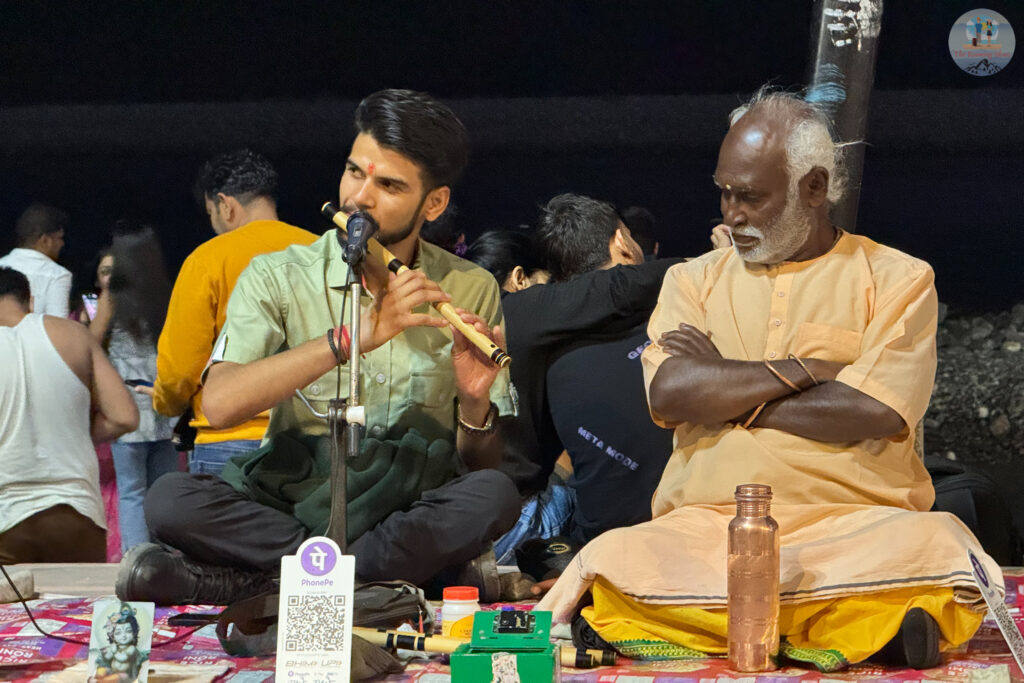
Sai Ghat is my personal favourite. But I’ll still never forget the evening we spent at Triveni Ghat. The trance we felt near the river, just a few meters away from the aarti point, almost in darkness. That’s where Maa Ganga felt most alive and most mystical, with the calls of peacocks drifting in from the forest and the trees reflecting softly on the water’s edge. It was surreal.
Yoga by the River
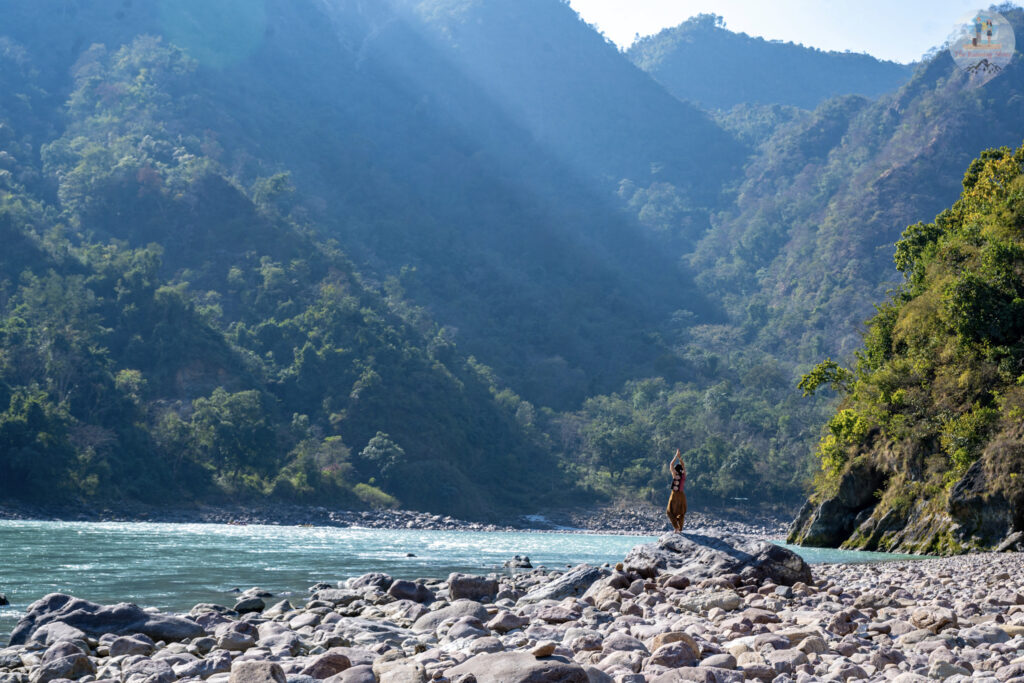
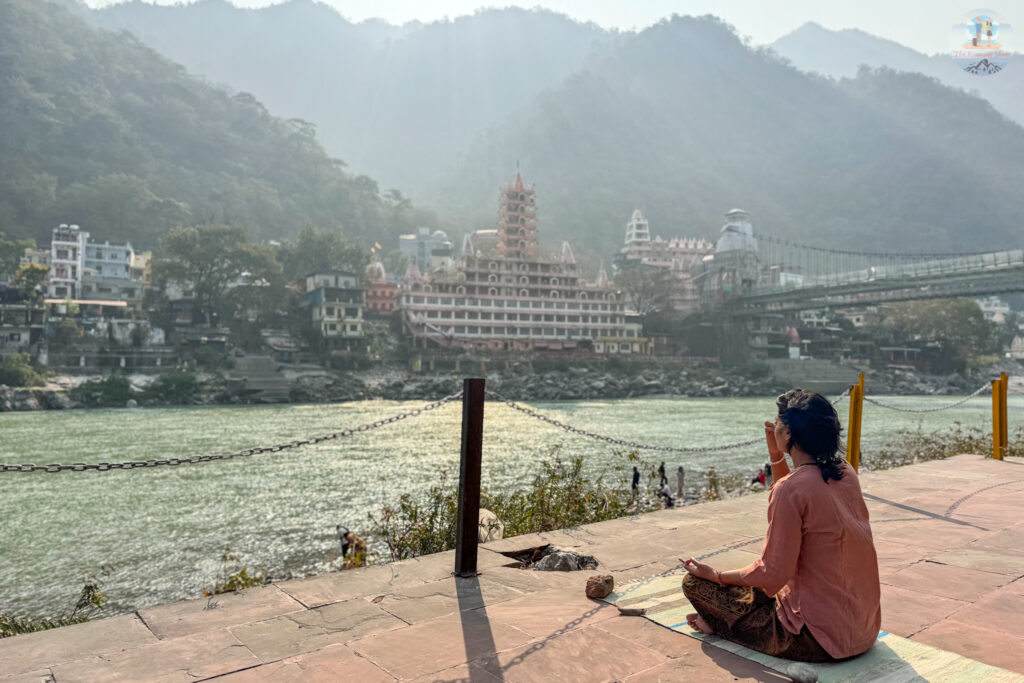
Rishikesh has many Yoga Shalas that offer drop-in yoga classes in the morning and evenings. But practising Yoga by the river has a magic of its own. The warmth of the morning sun, the view of Maa Ganga, and the stillness of the mountains create a space that feels made for yoga and meditation. From my own experience, the body flows on its own here – fluid, subtle and in sync with the rhythm of the river. So if you are a Yoga practitioner, this is something you should not miss in Rishikesh.
Head to one of the ghats or the sandy riverbank early in the morning. You’ll find people with their mats spread out, some practising on their own, others in small groups led by instructors. Find a peaceful corner, roll out your mat, and simply flow with the moment. I practiced at Sai Ghat and can’t tell you just how much I loved the experience.
Meditate in the Ancient Caves
I have always been drawn to the caves of Rishikesh – to the thought that centuries ago, rishis chose these very spaces for their tapasya. Today, you can walk in quietly, close your eyes, and breathe in that same space. Isn’t it fascinating? Also, there is a different kind of energy in these caves, as if the walls have absorbed years of mantras and unwavering devotion.
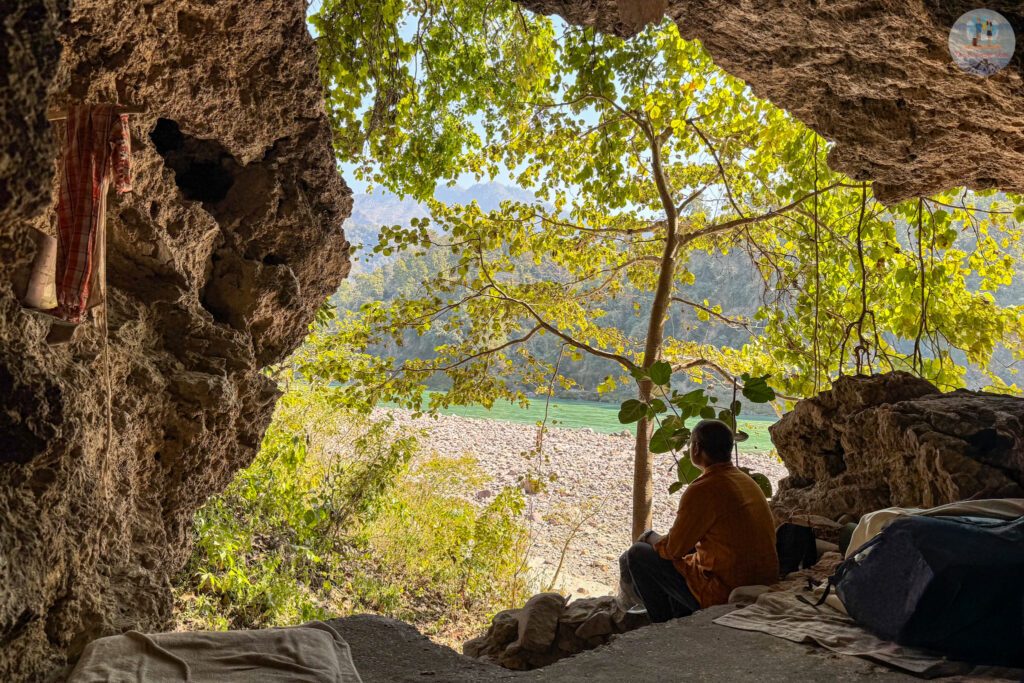
Vashisth Gufa is part of the Vashisth Ashram on the Badrinath road, about half an hour ride from Laxman Jhula. This is believed to be the very cave where Rishi Vashisth (one of the seven great Saptarishis) meditated for years. The natural cave is almost entirely dark, except for a single diya flickering gently before the Shivling. Cushions are placed along the floor to sit and meditate. And once we closed our eyes, the stillness inside felt so different. It was deeper, heavier and something sacred.
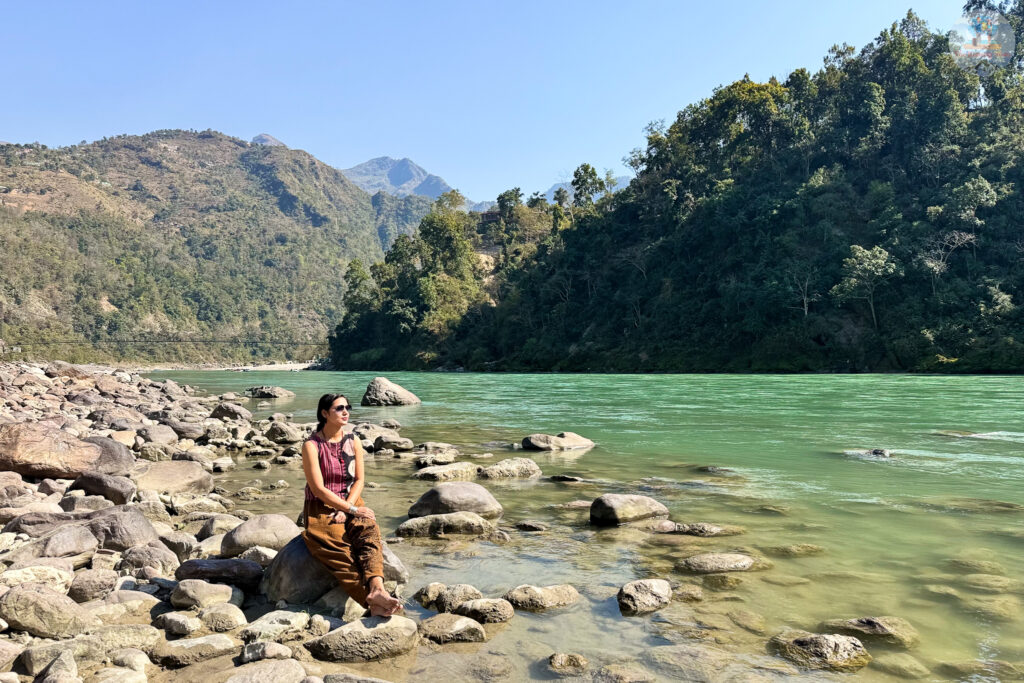
Just outside the Ashram compound, Maa Ganga flows in her emerald calm. Tucked quietly behind a tree near her rocky banks lies Arundhati Gufa, where Devi Arundhati (Sage Vashistha’s wife) is said to have meditated. We felt an instant connection here. Meditation came effortlessly. With eyes closed, all I could hear was the sound of the flowing river.
We visited Vashisth Ashram twice – meditating, taking a dip in the river and just sitting down by the river and doing nothing. That is how much power this place holds to attract you again and again.
Timings: 8am – 1pm, 3pm – 6pm
Weekends get very busy at Vashisth Gufa, especially around closing time. And with limited space, it’s not really possible to sit and meditate then. So try visiting early in the morning or on weekdays if you want to truly enjoy the peace and quiet.
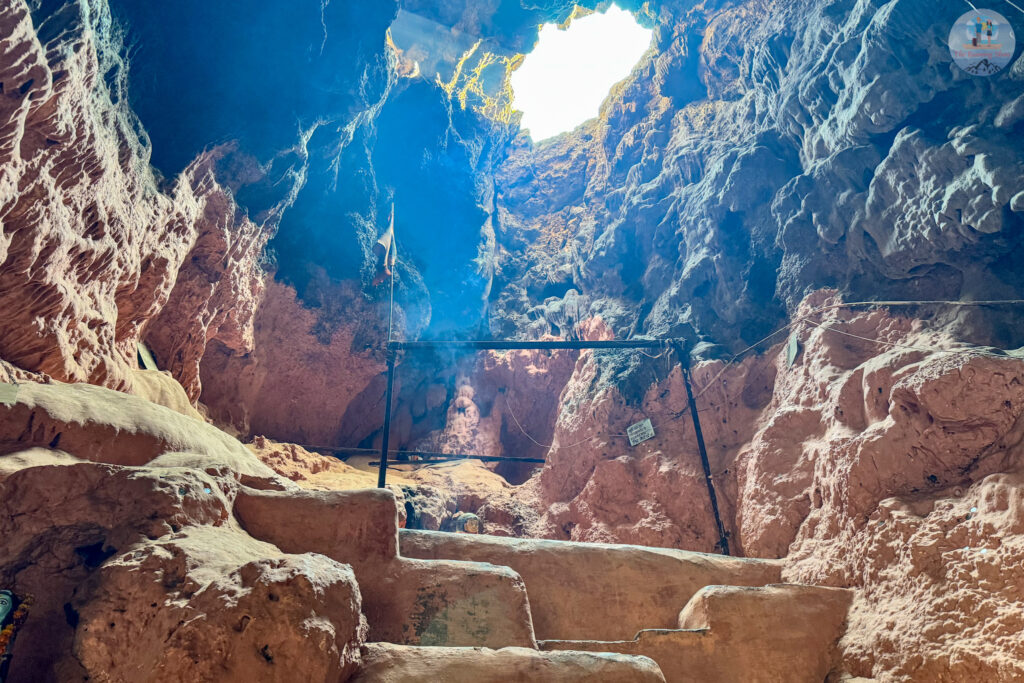
Then there is Jhilmil Gufa – a short ride from Neelkanth Mahadev temple and a short hike away. Set inside the forest, it’s a natural limestone cave that has an opening on the top where sunlight seeps in to the cave. This is the place where Baba Goraknath is said to have meditated for years to appease Lord Shiva. We meditated there for a while and could feel the powerful energy that is raw and grounding. The cave is inhabited by some Sadhus and they so kindly offered us tea as we were leaving. What a beautiful experience it was!
Visit the temples
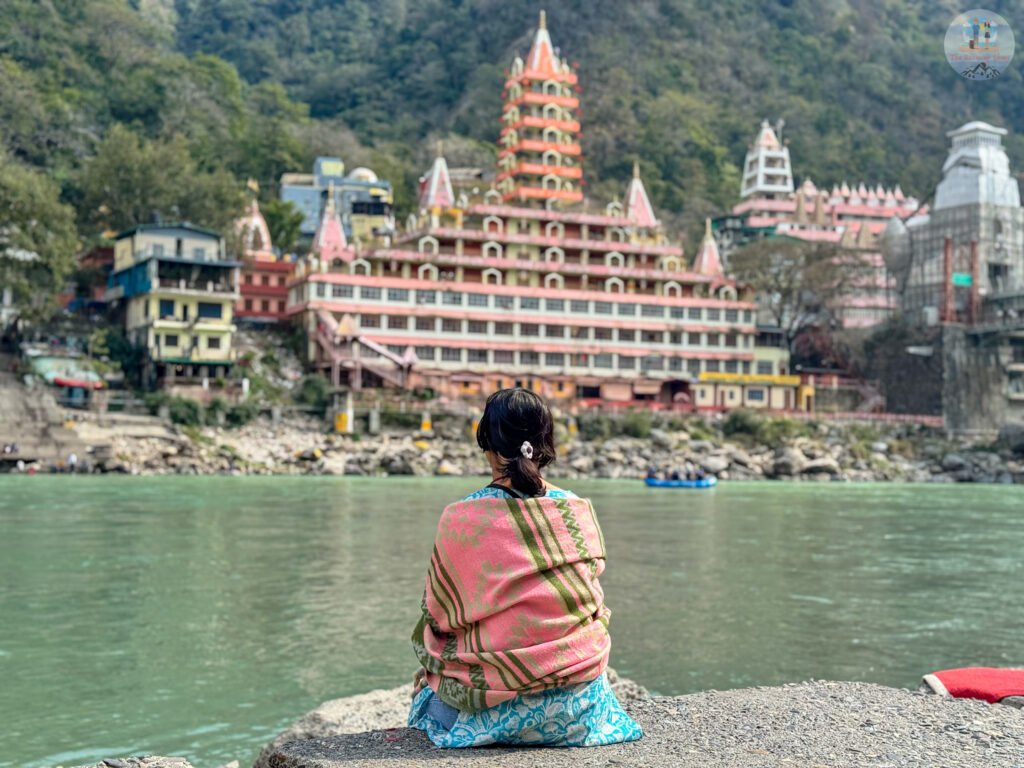
Rishikesh has temples galore – both old and new, some popular, some quietly tucked away. But every temple we visited had a story and a different charm, entirely of its own. Be it the Bhootnath temple where the bhoots of Shiva’s wedding procession are believed to have stayed. Or the Tera manzil temple (aka Trayambakeshwar temple) where Shiva is worshipped with different names on different floors along with other deities. Both temples offer gorgeous views of Maa Ganga and Rishikesh. We especially loved the sunset views from Trayambakeshwar temple.
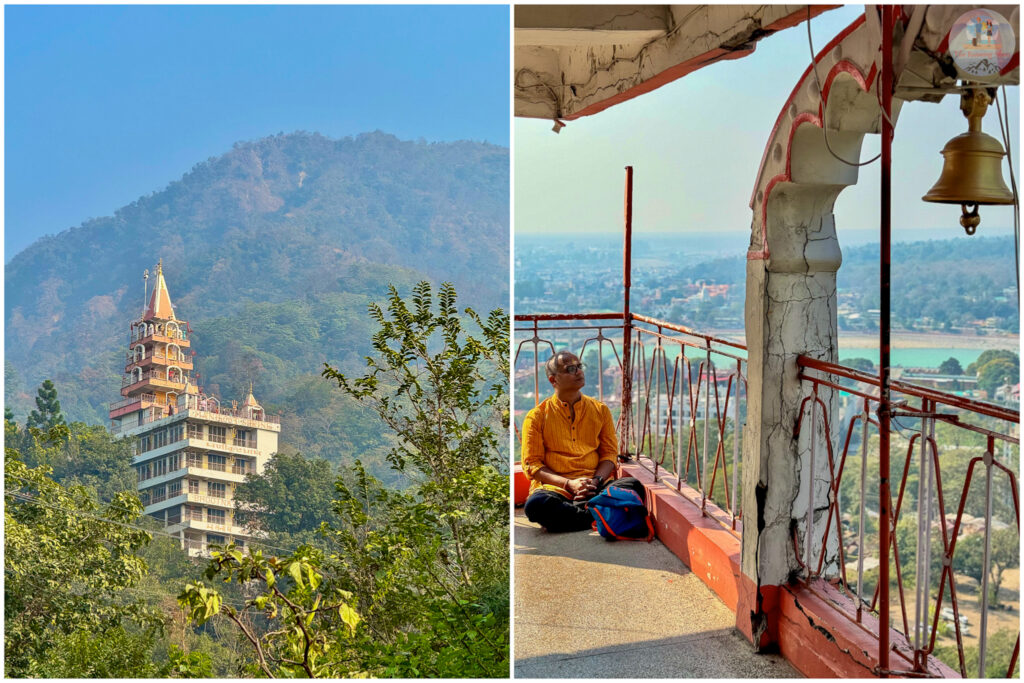
Then comes Neelkanth Mahadev temple, a bit away from the city. But this is the place where the Swayambhu linga is worshipped. As per legend, after consuming the halahal poison that emerged during Samudra Manthan (churning of the sea), Shiva came to this place and meditated for thousands of years to soothe its flame. And before leaving for Kailash, he ensconced a Shiv Linga for the welfare of humanity.
A request to the devotees or visitors:
Please do not take Ganga Jal in plastic containers to shower on Lord Shiva. We could see a lot of plastic in the temple premises and it felt so out of place. Go with a clear heart and that offering should be enough.
Once you are done with darshan at Neelkanth temple, head to the Parvati temple a few kilometres away. It’s a small temple nestled inside a village, surrounded by scenic beauty and far more peaceful than the more popular shrines. The villagers there are warm and welcoming too.
Locals also recommended Virbhadra temple and Kunjapuri temple. But we could not make time for them. So go ahead and visit if you have time.
Note:
- All the temples we visited have either stairs or needed some walking. May not be suitable for elders.
- The road to Neelkanth temple is not in good condition and I would not recommend riding a scooter there. Opt for a taxi instead and you can combine Jhilmil Gufa and Patna waterfall on the same trip.
A dip in the holy waters of Maa Ganga
They say your sins wash away when you take a dip in the holy waters of Maa Ganga. I don’t know if it works that way. But I can say this with certainty – it is a soul-stirring experience.
The waters were freezing cold in February. And yet, the moment we immersed ourselves, it felt like a warm embrace. As if the river did not just touch the skin, but reached somewhere far deeper. Emotions rose without warning, tears flowed – quiet and unplanned. Even now, we struggle to put that feeling into words. But like Sush said, “It felt like hugging your mother after a long time.” And that is perhaps the closest description of it.
If you are planning to take a dip in Rishikesh, here are a few practical things to know.
- Many ghats have iron chains fixed along the steps, allowing you to hold on as you enter the water. Not all ghats, however, have proper washrooms for changing afterward. From what I have seen, Sai Ghat has a washroom just above the ghat, and Triveni Ghat also has changing area. That said, Triveni Ghat is one of the most popular ghats in Rishikesh and can get quite crowded, especially during peak season or holidays.
- At other ghats, it is better to check with nearby shops or ashrams in advance to see if they allow visitors to use their washrooms for changing. In the end, choose what feels most comfortable and convenient for you. The experience itself, that moment in the river is what truly stays with you long after you’ve stepped back onto the ghat.
Sunsets and Evenings
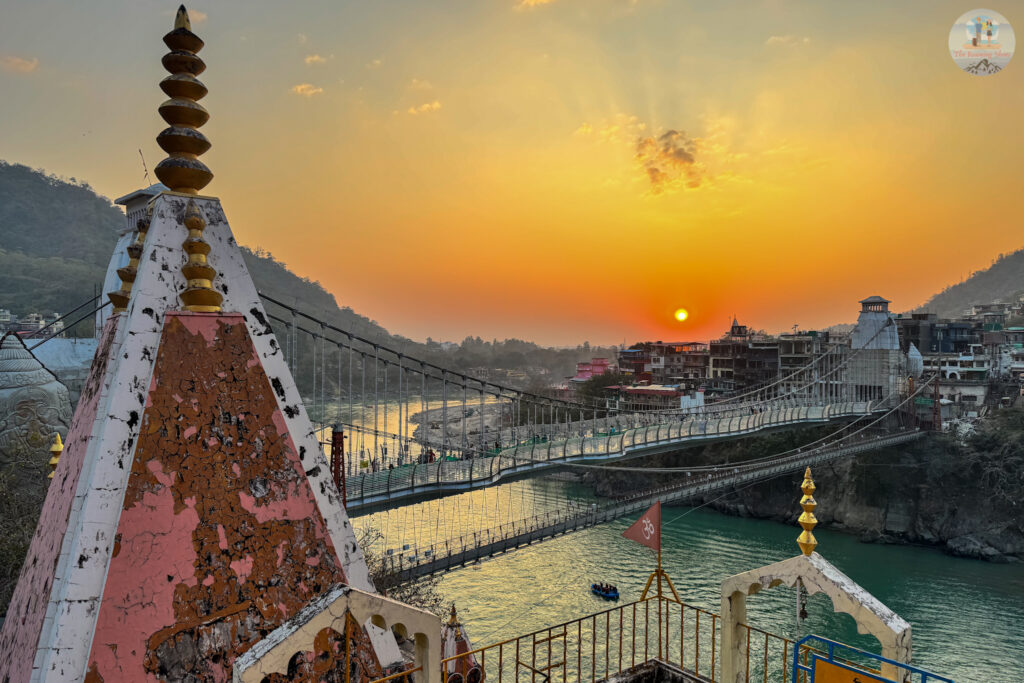
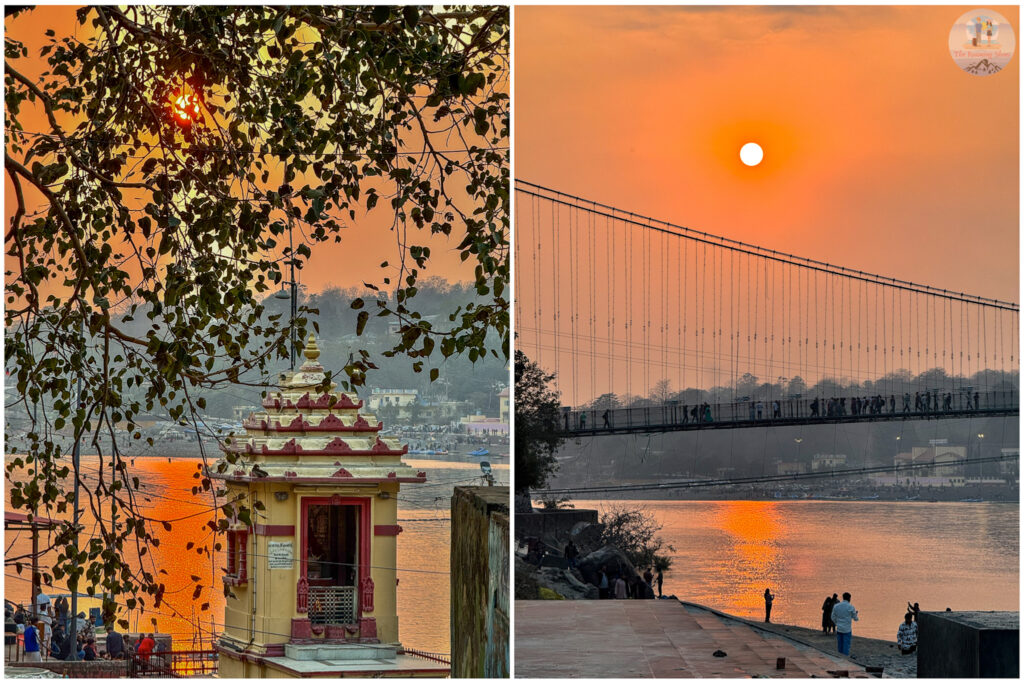
Sunsets are always beautiful. But in Rishikesh, they come charged with a divine energy. The eyes fail to move away as the last rays of the sun set the river on fire. The temples glitter in a surreal golden glow, and devotional music begins floating through the air as aarti preparations begin at the ghats. This is when everything and everyone slows down. In February, during our visit, the sunset sky complemented the evening aarti beautifully.
If you love sunsets, then head to Ganga Beach (the sandy river bank near Ram Jhula) in the evening. It offers stunning views of the bridge stretching over the glowing river and the ghats bathed in soft light. Paramartha Niketan and Triveni Ghat too look surreal during sunset.
Walking along the lanes of Rishikesh
The lanes of Rishikesh have held stories for centuries. Lined with old houses, yoga schools, and ashrams, they slowly shift into pockets of hostels, cafes, and street-side bustle. Some hide small, quiet pockets; others hum with life.
Bulls and the cutest dogs claim their favourite spots, lounging peacefully without a care in the world. As you walk, the scent of chai drifts through the air, especially in the evenings. And Maa Ganga is never too far away.
A quiet message on an ashram wall, a sadhu lost in thought, or an unexpected conversation with a stranger – these are moments you don’t seek, yet they find you. Each lane has a story. And walking through them feels like witnessing a Rishikesh that’s truly alive.
Try some street food and tea
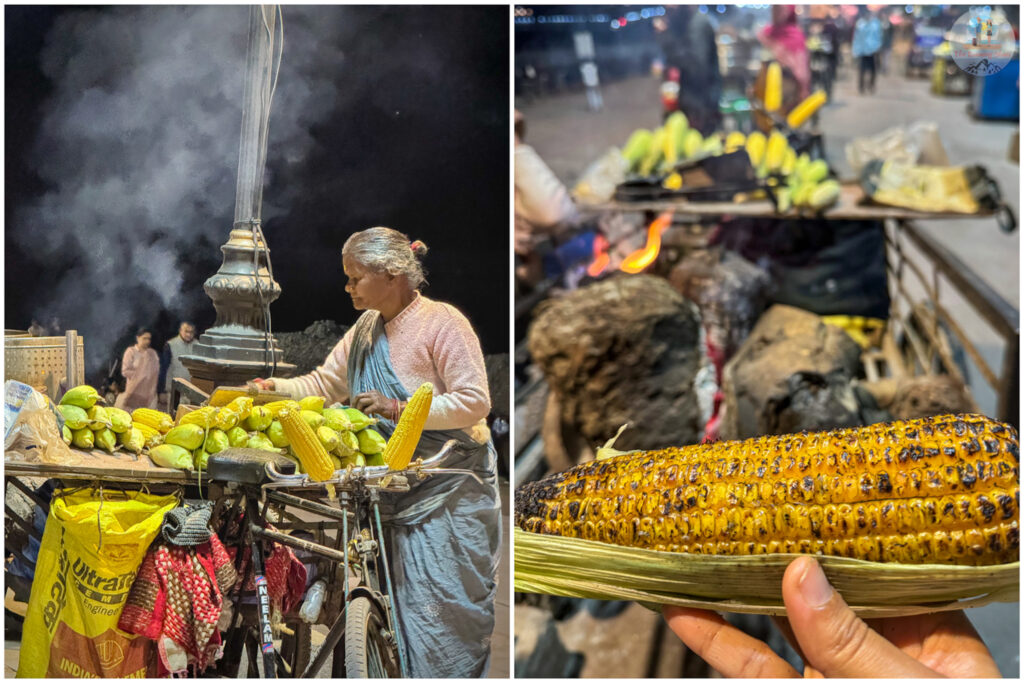
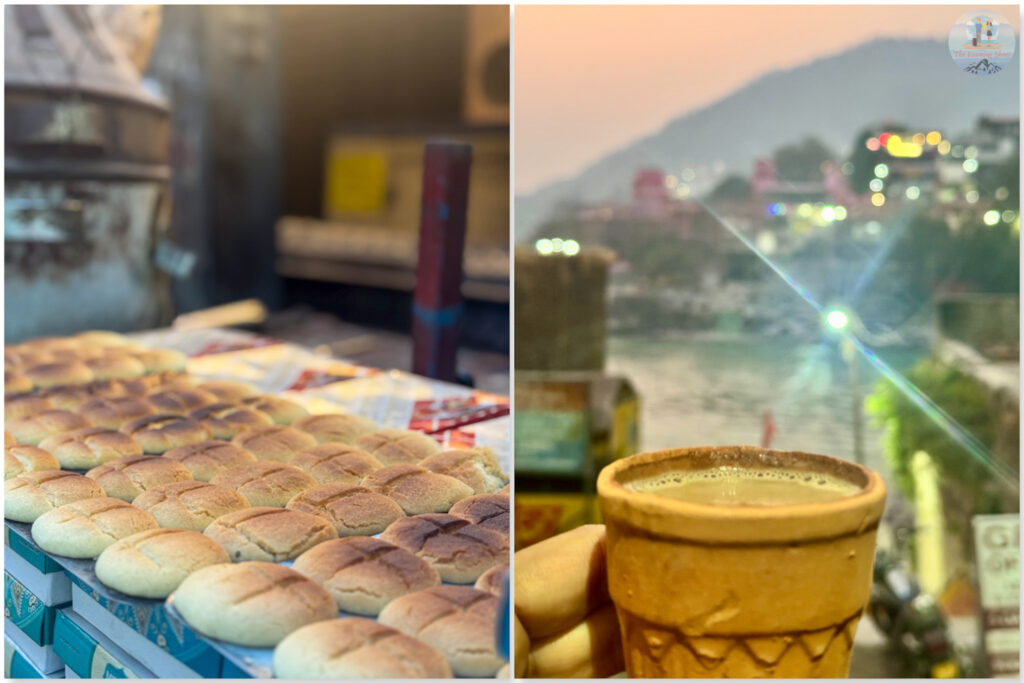
One of the things I absolutely loved about Rishikesh is its street food scene. There’s so much variety, and it somehow tastes even better with Maa Ganga flowing nearby. My personal favourites were the stuffed parathas and hot Maggi in the mornings, and in the evenings, nothing beats a plate of samosa paired with a cup of ginger chai.
You’ll also find fresh cookies being baked right on the roadside in the evenings – one around Lakshman Jhula and another close to Chotiwala Restaurant near Ram Jhula. They taste heavenly straight out of the oven. Though bun maska and chat seemed quite popular, I personally found them a bit underwhelming.
Talking to people
Before visiting Rishikesh, I often felt that in today’s world of social media, people are becoming increasingly unhappy. Caught in comparisons and complaints, gratitude seemed to be quietly disappearing. But Rishikesh changed that perspective for me. We met people who had faced real hardships, yet carried a rare sense of contentment. It was surprisingly refreshing.
Like the priest at the temple. Life hadn’t been kind to him, with failed ventures and losses behind him. Yet here he was, serving Shiv Ji and welcoming everyone with a warm smile. As we kept talking, he mentioned how grateful he was that Shiv Ji chose him for his seva. In his words, “I just sit here, invite people to see Pashupatinath Ji… the rest, he takes care,”- he said, pointing to the deity. There was a quiet surrender in his words, a deep trust that felt both humbling and strangely comforting. In that moment, I was truly envious of him.
Then there was the aunty running a small maggi and chai stall with her sons. Her village had no proper roads, schools, or hospitals until recently and that made life quite challenging. Yet, she spoke only of gratitude. “Ganga Maa always provides. It has been a hard life, but a good life,” she said, with a smile that stayed with me. When she gently took our plates saying, “you are like my kids,” we felt an unexpected warmth of belonging.
These were just a few of many such moments. Everywhere we went, there was kindness, warmth, and a sense of connection, especially when people heard we grew up in Jagannath Dham, Puri.
Accommodation in Rishikesh
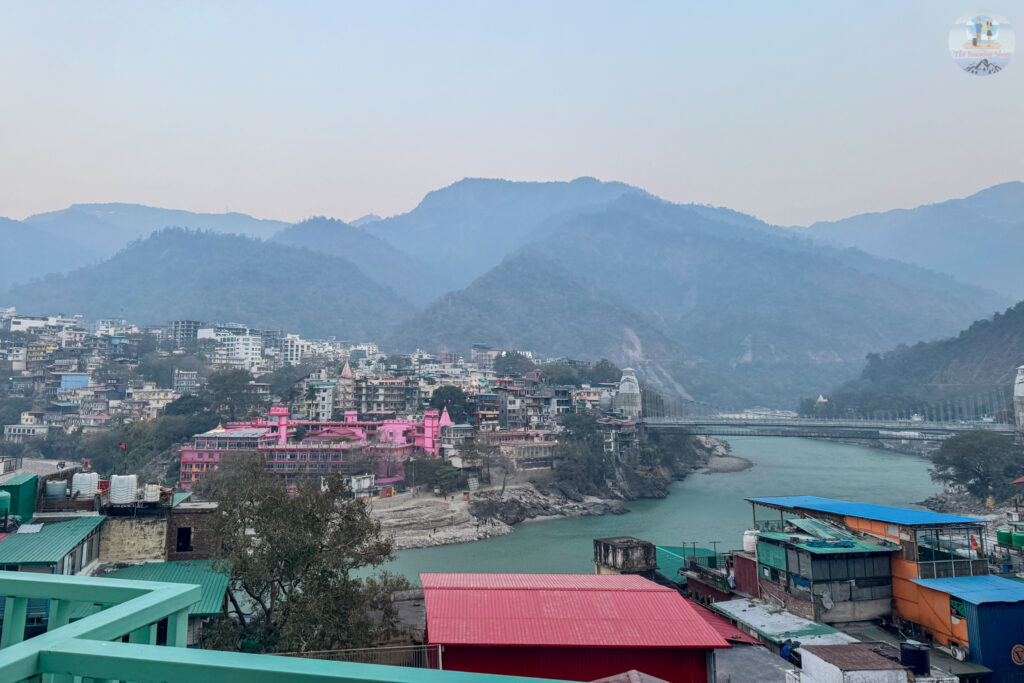
If you are in Rishikesh for a short period, it’s best to base yourself around Lakshman Jhula or the Tapovan area. Both have abundant hostels, hotels and airbnbs catering to different budgets. You will be close to key spots like Sai Ghat, Ram jhula, Shatrughna Ghat and Paramartha Niketan. And will have easy access to Cafes, restaurants and market too.
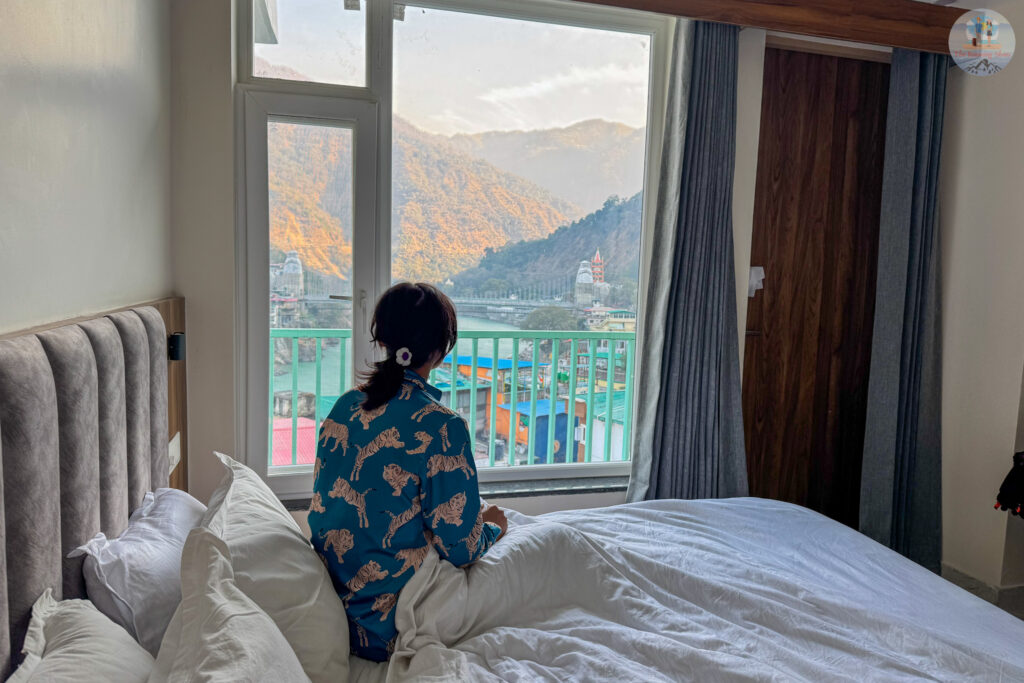
We stayed at Shiva Yoga Sthal close to Laxman Jhula and absolutely recommend it. They have lovely Ganga facing rooms on third and 4th floors with lift access. And waking up to the view of Maa Ganga and Trayambakeshwar temple everyday felt nothing short of surreal.
Many stays around Lakshman Jhula are on elevated terrain and require an uphill walk. While its great for fat burning (that’s what I kept telling myself 😉 ), it can get tiring sometimes. So choose your accommodation wisely if steep walks might be an issue.
Food Recommendations
When we visited Rishikesh, I was excited to try all the famous cafes and restaurants everyone recommended. But as it turns out, what works for some doesn’t always work for all. One of the most talked-about cafes we visited on our very first morning turned out to be quite average, and overpriced. It was clearly popular for its views, but since we were already waking up to beautiful river views from our room, all we really cared about was the food.
A few other places didn’t fare much better. Either the service was off or the food leaned heavily towards Western palates. And let’s just say, my taste buds are far too Indianised to fall for that food 😀 . So we ditched the list, followed our instincts, and ended up discovering places we truly loved.
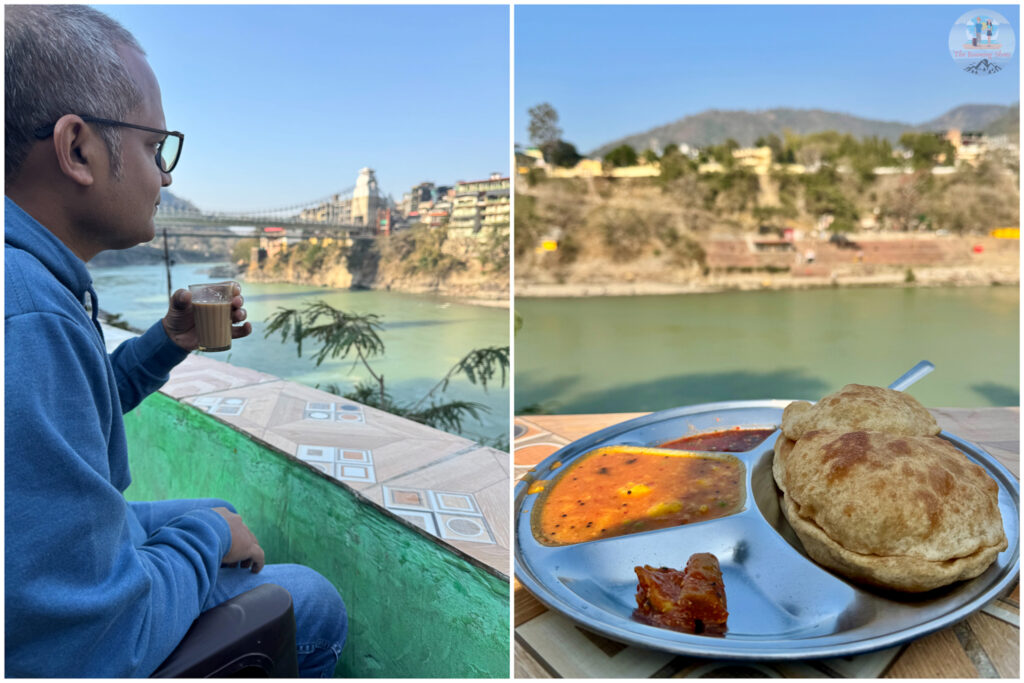
- For breakfast, nothing beat freshly made hot parathas, puri sabji, and ginger chai at Pandit Ji’s restaurant—with views of Maa Ganga and Lakshman Jhula. We just could not stop going back.
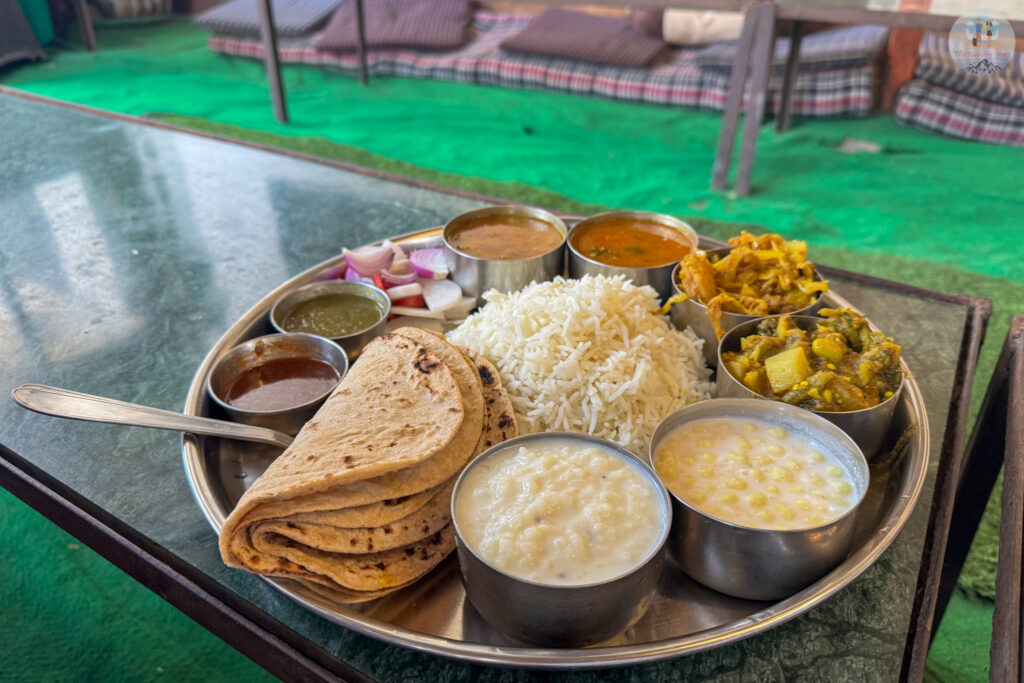
- For lunch, Dada’s Thali was our go-to spot for simple, homely food. The thali is hearty, with multiple sides and easily enough for two. It’s affordable, comforting, and served with warmth. Don’t miss their mango lassi.
- For dinner, Karwan stood out for its food, warm service, and calming views of Sai Ghat. Their pizza and hot ginger lemon with fries were perfect on a cold evening.
- We also tried The Arches Café & Bakery by Salvus. The food was good (we loved the thukpa and stuffed mushrooms), but the service was, honestly, quite disappointing. They also levy a service charge, so I would suggest visiting during off-hours if you do go. Their coffee smelled amazing, though I didn’t get a chance to try it.
- For evening cravings, Samosa and Kachori with aloo sabji were our favourite at Agarwal Sweets near Lakshman Jhula. Though I could not get a chance to try their rabdi lassi in Kulhad, it looked delicious. They have a good variety of sweets too.
- We also loved samosa and chai at a shop in the Paramartha Niketan lane. Indeed they served the best samosa with a hint of humour. But sadly, I could not note the name of the shop.
Know before you go
Babas of Rishikesh
Rishikesh has long been a refuge for sadhus and babas. Some reside in ashrams while others wander freely through the town, often seen resting on benches or by the ghats, even on cold nights.
You may encounter a few who strike up conversations. Others may simply ask for a cup of tea or a small offering. From our experience, it’s best to approach these interactions with openness and respect, while also being mindful of your own comfort and boundaries.
Kids of the ghat vendors
When you visit the ghats, you will often be approached by children of street vendors selling diyas, flowers, or fish food. If you say no, some may ask if you could buy them something to eat instead. It’s hard to turn away from such innocent requests — a plate of Maggi, a tender coconut, or a small snack. So be patient and kind to them when they approach you.
Getting around in Rishikesh
We found taxis to be expensive in Rishikesh. But they are unavoidable for certain routes where the road conditions are bad (such as the one to Neelkanth Mahadev or Jhilmil Gufa). Otherwise, scooter is the most convenient and economic option to get around with rents ranging from 400-600 a day.
Packing Must
We visited in Feb mid and it was super windy and cold in the mornings and evenings. We even needed room heater for the first few days. So carry a lightweight jacket with hoodie or a shawl. Also, you will be walking around a lot. So carry a comfortable pair of shoes.
Conclusion
Certain events in Rishikesh reaffirmed our belief that some trips are not planned by us. Instead they are planned for us so that we could experience exactly what we need. In unexpected moments – an aarti invitation at a closing temple, conversations with strangers, and gratitude in the simplest places – we found something deeper than we came for.
Rishikesh wasn’t just a place we visited. It was where we found our way back to our old selves, quietly shaped by the simple, spiritually rich life of Puri, in the shadow of Lord Jagannath. We hope our blog gives you a glimpse of its true essence and inspires you to visit, mindfully.
For more such unique travel destinations and experiences in India, refer our other blogs here.
